RIFENG Releases Its First CSRD-Aligned 2025 Sustainability Report
Advancing ESG Governance and Transparency for the European Market
RIFENG has officially released its 2025 Sustainability Report, marking the Company’s first sustainability disclosure prepared in reference to the European Union’s Corporate Sustainability Reporting Directive (CSRD) and the European Sustainability Reporting Standards (ESRS).
This milestone demonstrates RIFENG’s commitment to aligning with European regulatory expectations and strengthening transparency across environmental, social, and governance (ESG) dimensions.
The report provides a structured and comprehensive disclosure of sustainability governance, material topics, management measures, and performance results, reinforcing RIFENG’s long-term development strategy in the European market.
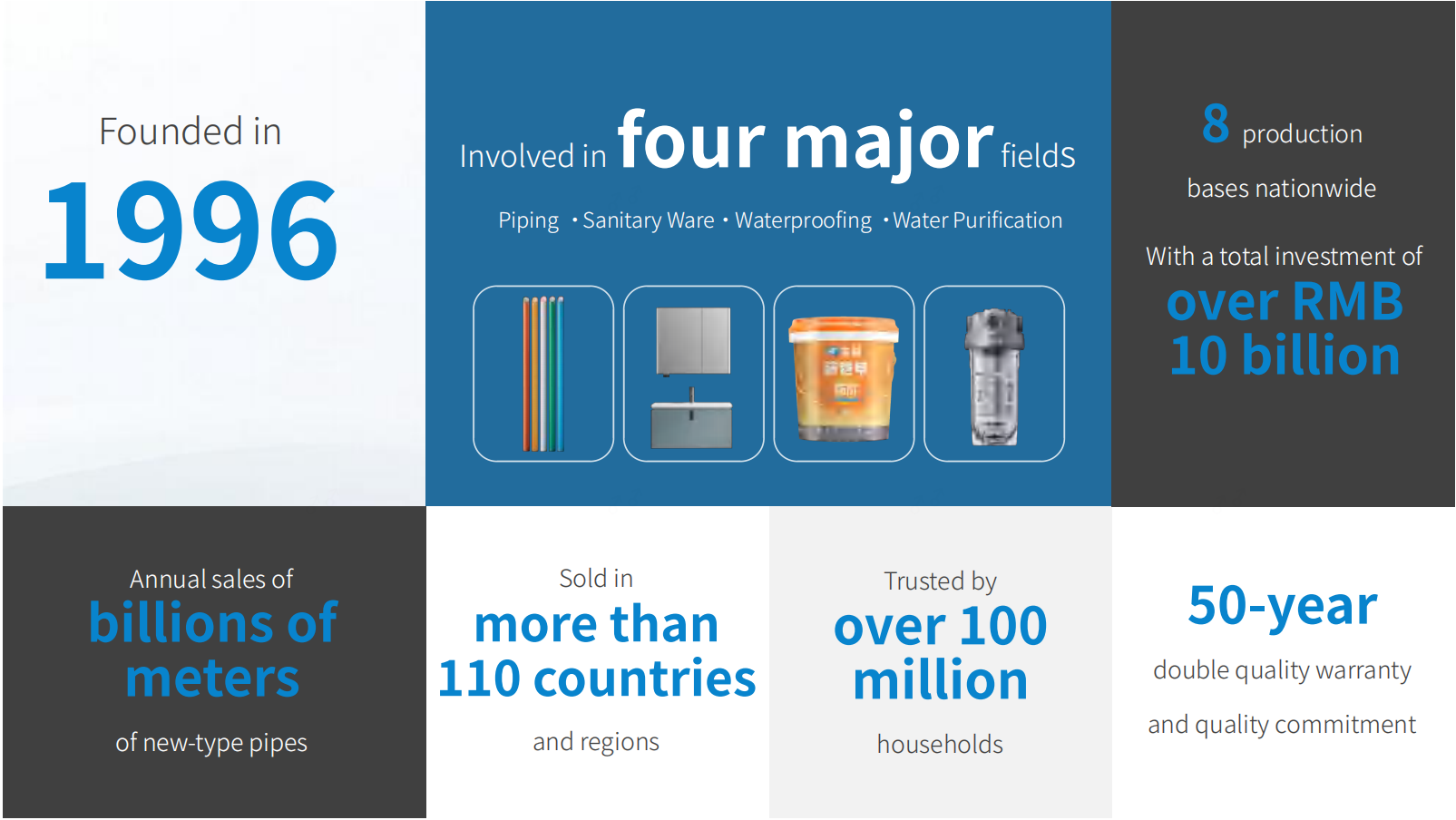
Aligned with CSRD and ESRS Framework
The 2025 Sustainability Report is prepared with reference to:
- CSRD issued by the European Commission
- ESRS formulated by EFRAG
The report systematically discloses information under key ESRS standards, including:
- ESRS E1 – Climate Change
- ESRS S1 – Own Workforce
- ESRS S2 – Workers in the Value Chain
- ESRS S4 – Consumers and End-Users
- ESRS G1 – Business Conduct
This structured alignment ensures that RIFENG’s sustainability disclosures meet internationally recognized reporting requirements and enhance comparability for European stakeholders.
Establishing a Robust ESG Governance Structure
To integrate sustainability into corporate strategy, RIFENG has established a hierarchical ESG governance structure, including:
- Top Management assuming ultimate responsibility for sustainability strategy and oversight
- An ESG Sustainability Committee serving as a permanent cross-departmental decision-making body
- Dedicated Environmental (E), Social (S), and Governance (G) working groups
This structure ensures that sustainability considerations are embedded into strategic planning, operational management, and risk oversight processes.
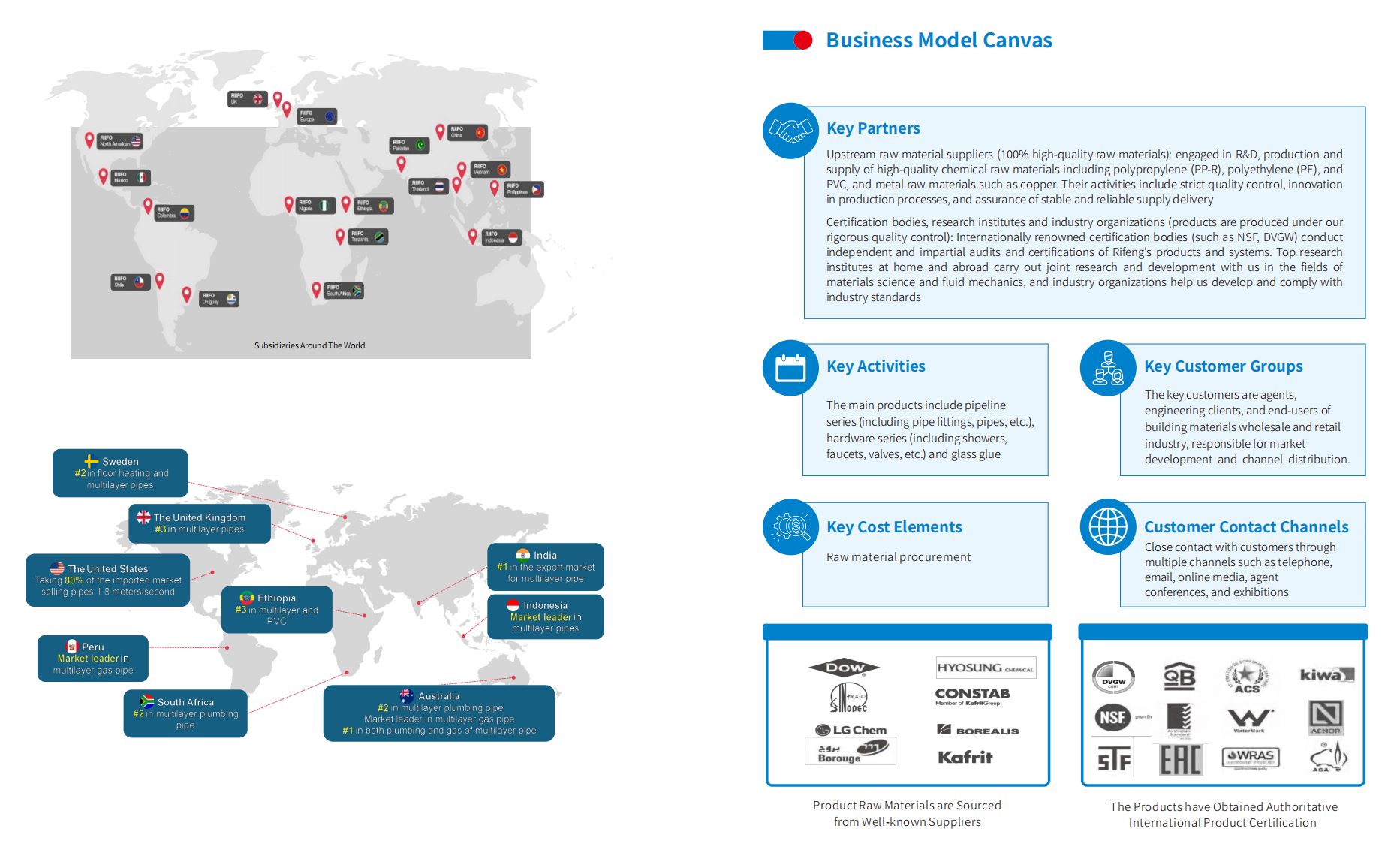
Conducting a Structured Double Materiality Assessment
In accordance with ESRS requirements, RIFENG conducted a systematic double materiality assessment through a five-step methodology:
- Understanding company background and value chain
- Identifying potential sustainability issues
- Transforming issues into specific Impacts, Risks, and Opportunities (IROs)
- Stakeholder engagement and scoring (impact and financial materiality)
- Management review and confirmation
Stakeholders involved in the process included senior executives, employees, suppliers, customers, regulatory authorities, and external experts.
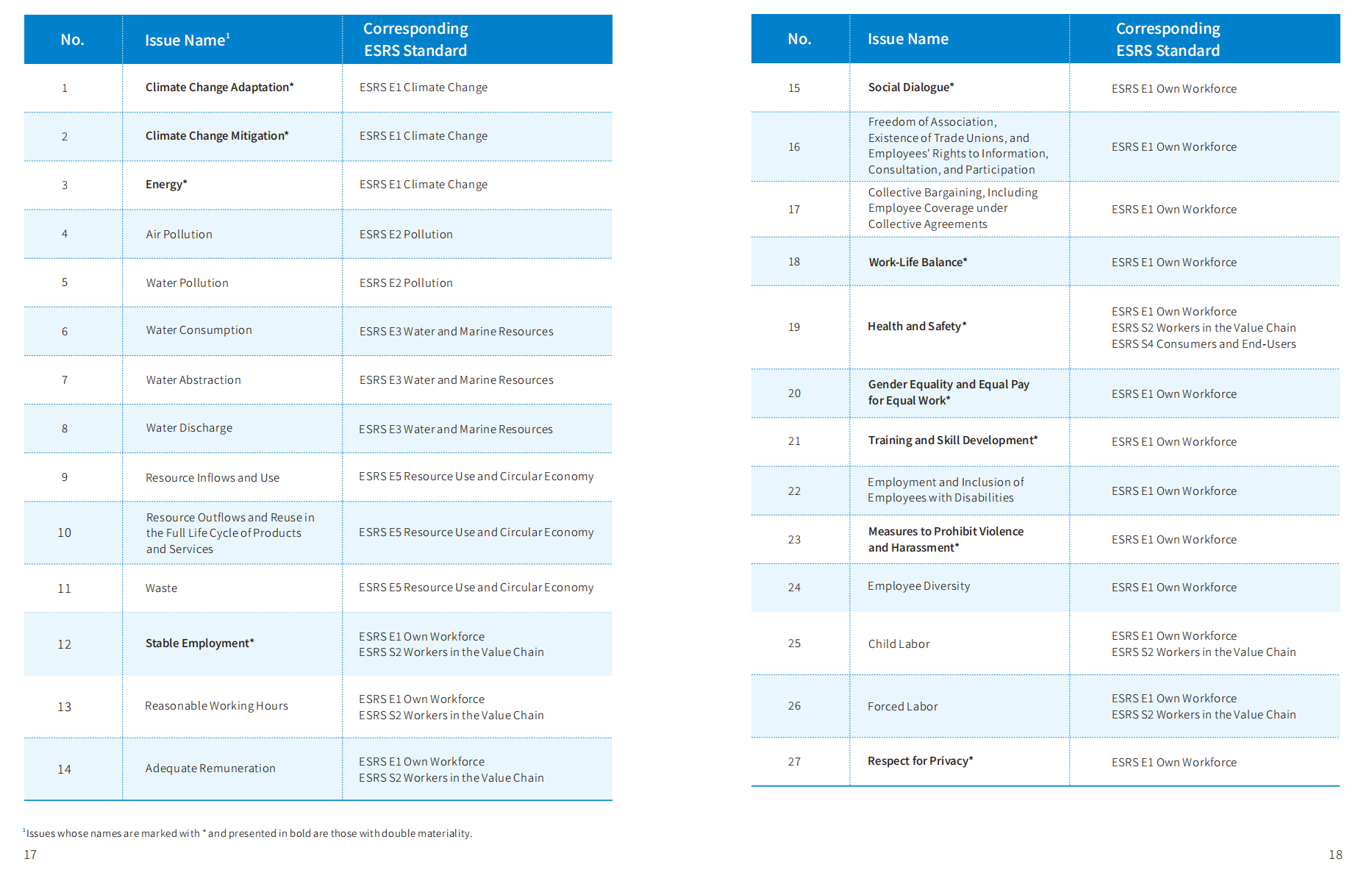
Based on this assessment, the Company identified the following core material topics:
- Climate Change (ESRS E1)
- Own Workforce (ESRS S1)
- Workers in the Value Chain (ESRS S2)
- Consumers and End-Users (ESRS S4)
- Business Conduct (ESRS G1)
This approach strengthens both impact-based and financial risk-based sustainability management.
Environmental Management and Climate Action
Under the ESRS E1 framework, RIFENG has enhanced its management of:
- Energy consumption and mix
- Scope 1, 2, and 3 greenhouse gas emissions
- Climate-related risks and opportunities
- Transition planning for climate mitigation
The Company has also:
- Put photovoltaic power generation projects into operation, increasing the ratio of green electricity usage
- Continued energy efficiency transformation projects in production workshops
- Achieved zero major environmental pollution incidents during the reporting period
- Maintained full compliance with pollutant discharge requirements
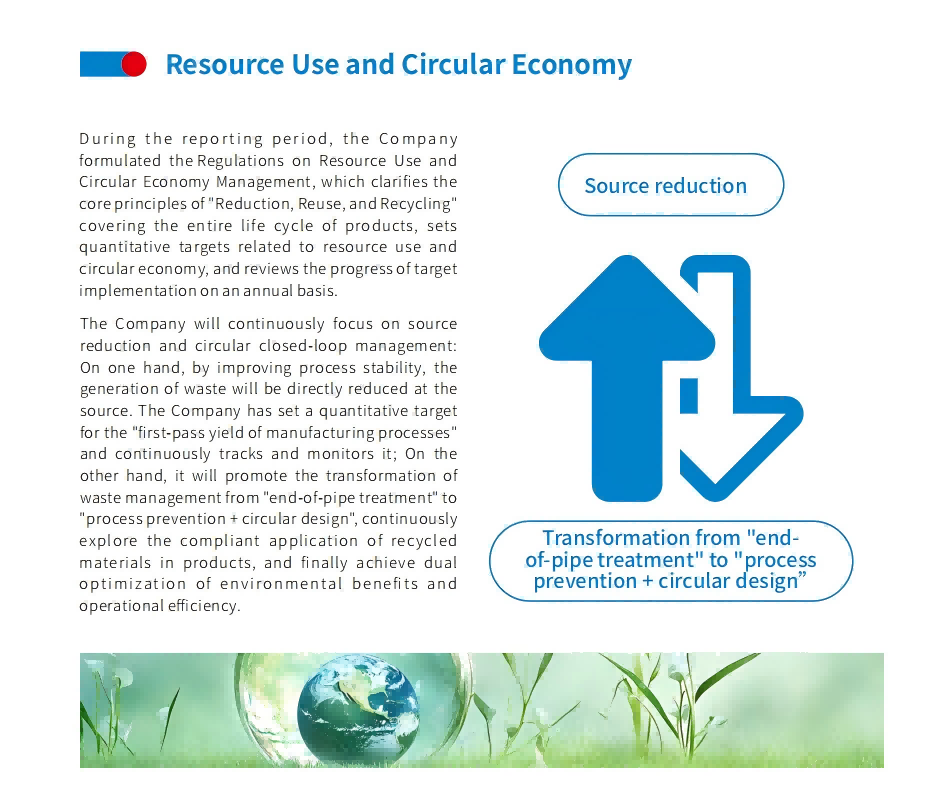
In addition, RIFENG formulated the Regulations on Resource Use and Circular Economy Management, reinforcing the principles of Reduction, Reuse, and Recycling across the full product lifecycle.
Responsible Workforce Management
Under ESRS S1 and related standards, the report discloses policies and performance regarding:
- Occupational health and safety management (ISO 45001 certified)
- Hazard identification and closed-loop rectification systems
- Digital safety management tools
- Training and skills development
- Work-life balance and employee wellbeing
During the reporting period, the Company recorded no occupational disease cases and maintained systematic safety inspection mechanisms to reduce operational risks.
Business Conduct and Risk Management
Under ESRS G1, RIFENG has strengthened governance and ethical management, including:
- Risk management and internal control systems for sustainability reporting
- Whistleblower protection mechanisms
- Anti-corruption and anti-bribery training and monitoring
- Supplier relationship and payment practice management
By integrating sustainability into internal controls and oversight mechanisms, the Company enhances long-term resilience and stakeholder confidence.
A Strategic Step Toward Long-Term Sustainable Development
The release of the 2025 Sustainability Report represents more than regulatory alignment — it reflects RIFENG’s strategic transformation toward structured ESG governance, data transparency, and long-term value creation.
As sustainability expectations continue to evolve in Europe, RIFENG will further refine data management systems, strengthen climate-related strategy integration, and deepen stakeholder engagement to ensure continuous improvement.
You May Be Interested in