Air Conditioning Piping Solutions: Why Manufacturers Are Moving Beyond Copper
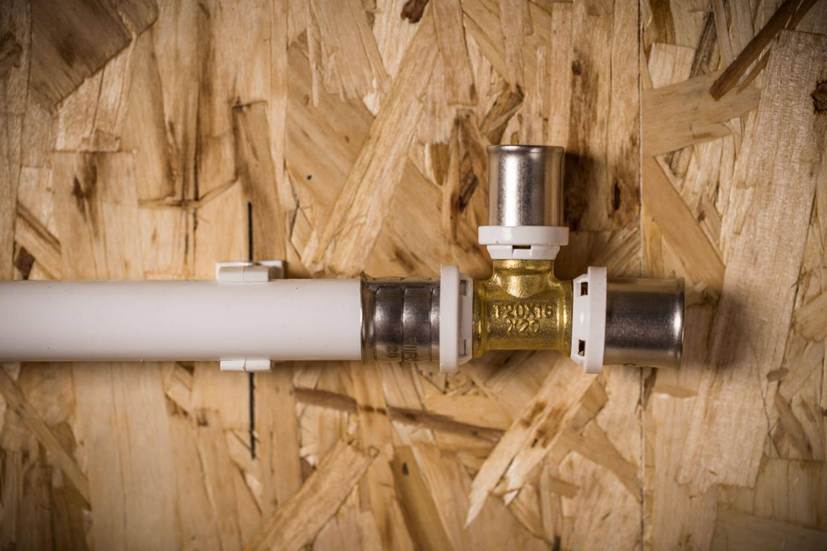
Traditional copper refrigerant piping typically requires brazing to connect pipe sections, involving specialized tools, skilled labor, and additional installation procedures. RIFENG's multilayer air conditioning piping system offers an alternative with compression connections, helping simplify installation and reduce on-site work.
What Is a Multilayer Air Conditioning Piping System?
Multilayer pipe is a newer alternative to copper for air conditioning refrigerant lines, built to deliver equivalent air conditioning performance at a lower installed cost. RIFENG's PEX-AL-PEX multilayer pipe consists of five layers: an inner layer of cross-linked polyethylene (PE-X), an adhesive layer, a middle aluminum layer, a second adhesive layer, and an outer layer of cross-linked polyethylene.
That structure is what gives the pipe its combination of properties — the flexibility and ease of handling of a plastic pipe, paired with the aluminum layer's tensile strength, barrier performance, and dimensional stability, something closer to what copper historically offered.
Why Contractors Are Choosing Multilayer AC Piping
● No brazing required. The system connects through a compression fitting, not an open-flame brazed joint — installation doesn't require a licensed welder or hot-work permit on site.
● Compression Connections for Easier Maintenance. Unlike permanently brazed joints, compression connections allow easier disconnection when servicing or modifying the piping system, subject to the manufacturer's installation guidelines.
● Lightweight and Cost-Effective. Multilayer pipe is lighter than copper and typically carries a lower material cost.
● Fewer leak points. A smooth inner wall keeps pressure loss low, and fewer joints across a given run means fewer potential points of failure.
RIFENG's multilayer AC piping is also built to resist natural corrosion and condensation problems that can affect metal piping over time; the aluminum core provides an effective barrier against oxygen and gas permeation, while the PE-X inner and outer layers contribute to the pipe's flexibility, durability, and corrosion resistance.

Performance and Compatibility
RIFENG's multilayer air conditioning piping is designed for mini-split air conditioning systems (cooling only), rated for a maximum working temperature of 60°C and a maximum working pressure of 552 PSI (38 Bar). The system has been evaluated for use with specified refrigerants, including R-22, R-32, and R410A, and other listed refrigerants, subject to the applicable product approval.
Where This System Is Used
RIFENG's multilayer air conditioning piping has been installed across a range of real-world commercial and residential projects, including:
● Hospital Punta Pacifica in Panama City, Panama — a hospital project completed in 2020
● STAN Polytechnic of State Finance in Tangerang, Indonesia — a school project completed in 2022
● Marxal Resort & Spa in Sheki, Azerbaijan — a hotel project completed in 2016
● Torre KOI in Monterrey, Mexico — a residential tower completed in 2017
● Wika Office Tower in Jakarta, Indonesia — a commercial project completed in 2016
That spread — hospitals, schools, hotels, residential towers, and commercial office buildings — reflects how the same piping platform adapts across very different installation environments.

Standards That Matter for This Application
Air conditioning piping carries refrigerant under pressure, which is a different application from standard water supply piping — and it's evaluated against standards written specifically for that use.
RIFENG's multilayer AC piping complies with the International Mechanical Code (IMC), International Residential Code (IRC), and Uniform Mechanical Code (UMC) across their 2006–2021 editions, along with ASTM F1281, the standard specification for cross-linked polyethylene/aluminum/cross-linked polyethylene (PEX-AL-PEX) pressure pipe, and ICC-ES LC1035, the standard specification covering PEX-AL-PEX pipe and fittings specifically for refrigeration applications.
That last standard is the key distinction: a pipe certified for drinking water isn't automatically rated for refrigerant service. ICC-ES LC1035 exists specifically to evaluate multilayer pipe and fittings for refrigeration use, which is what buyers should confirm when sourcing AC piping rather than general-purpose multilayer pipe.
A Complete System, Not Just Pipe
RIFENG also offers a matching Air Conditioning Protective Pipe Slot — a PVC trunking system designed to fix and protect the exposed sections of AC piping along walls and building exteriors. Rather than sourcing pipe and protective trunking from separate suppliers, buyers can source both as part of the same product system.
Frequently Asked Questions
Q: Can this piping system be used with any refrigerant?
A: RIFENG's multilayer AC piping is compatible with a range of common refrigerants, including R-22, R-32, R410A, and several others. For a refrigerant not covered in the manufacturer's applicable list, confirm compatibility directly before specifying.
Q: What tools are needed to install it?
A: Installation uses a pipe cutter, a reamer to round and bevel the pipe ends, and a wrench to tighten the compression fittings — no brazing torch or welding equipment is required.
Q: How does its service life compare to copper?
A: RIFENG markets the system as offering air conditioning performance equivalent to copper pipe, with corrosion and condensation resistance built into the multilayer structure. The manufacturer does not publish a specific side-by-side lifespan figure against copper, so buyers with strict service-life requirements should request manufacturer documentation directly.
Conclusion
RIFENG's multilayer air conditioning piping system offers an alternative to traditional copper refrigerant lines, combining the advantages of metal and plastic materials with compression connections that help simplify installation and reduce on-site work. Backed by refrigeration-specific standards and a track record across hospitals, schools, hotels, and commercial towers, it's a practical alternative for teams looking to simplify installation without compromising on reliability.